

Burbank businesses looking for local colocation or connectivity have more infrastructure choices than many realize. The city hosts dozens of facilities across multiple providers, making it a viable alternative to downtown Los Angeles for companies that need physical control over servers without the cross-town commute.
Understanding the local data center landscape helps IT leaders compare power density, carrier options, and compliance posture before signing a contract. This guide breaks down what matters most when evaluating Burbank data centers and how those decisions connect back to broader IT strategy.
Key takeaways from this article:
- Burbank hosts 44 data centers across 16 providers, giving businesses meaningful choice in colocation partners.
- The two largest local facilities are Digital Realty BUR10 on Winona Avenue and Cogent’s wholesale site on South Flower Street.
- Carrier-neutral facilities in Burbank offer access to Cogent, Level 3, AT&T, and additional carriers plus dark fiber options.
- Power capacity and square footage vary significantly by site, so match facility specs to actual workload requirements.
Why Burbank Data Centers Matter for Local Businesses
Los Angeles County has one of the densest data center markets in the United States, and Burbank sits in a strategic position within that ecosystem. For businesses based in the San Fernando Valley or along the 134 corridor, a Burbank facility eliminates the need to drive or courier equipment to downtown LA or El Segundo.
Latency to end users matters for real-time applications. A local Burbank presence can shave milliseconds off round-trip times for customers and employees in the Valley, Glendale, Pasadena, and nearby cities.
Those milliseconds add up when you are running VoIP systems, video conferencing, or transactional databases.
Physical access remains important even in a cloud-first world. Compliance audits, hardware replacements, and emergency maintenance all go faster when your team can reach the facility in 20 minutes instead of 90.
The Scale of Burbank’s Data Center Market
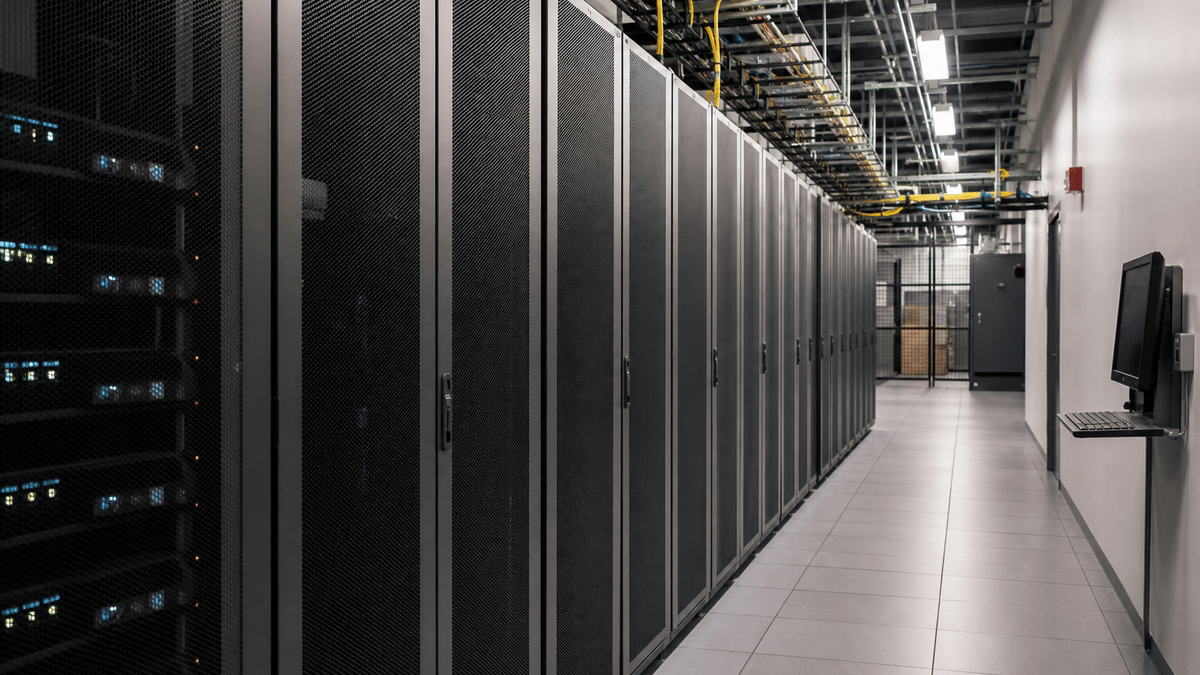
The Burbank area hosts 44 data centers operated by 16 distinct providers. That concentration creates competition on price, connectivity, and service levels that benefits local businesses.
Not all of those 44 facilities are large-scale campuses. The mix includes enterprise-sized buildings, smaller edge sites, and network-dense carrier hotels.
Understanding which type matches your needs prevents overbuying space or underbuying power.
The two most prominent facilities are Digital Realty BUR10 at 3015 Winona Ave and the Cogent Data Center at 100 S Flower St. Both serve different use cases, so evaluating them side by side reveals trade-offs between scale, connectivity, and accessibility.
Inside the Major Burbank Facilities
Digital Realty operates BUR10 at 3015 Winona Ave in Burbank. The facility sits in a well-connected part of the city with access to multiple fiber routes and utility feeds.
Cogent’s Burbank data center at 100 S Flower St offers 52,768 square feet of wholesale colocation space. That footprint makes it a mid-sized facility by regional standards, large enough for multi-rack deployments but not so massive that individual tenants get lost in the operation.
Power at the Cogent site breaks down into 1.58 MW of protected capacity and 3.0 MW total. Protected power refers to the portion backed by redundant infrastructure like UPS and generator sets.
Total capacity includes utility feed and planned expansion headroom.

Connectivity and Carrier Options in Burbank
Carrier neutrality is a critical feature for businesses that want flexibility in their network architecture. The Cogent facility positions itself as carrier-neutral, with on-net access to Cogent, Level 3, and AT&T plus additional carriers and dark fiber providers.
Dark fiber matters for organizations running their own optical networking or needing dedicated, non-shared paths between facilities. Burbank’s fiber density supports these advanced use cases without forcing a move to downtown LA.
Multiple carrier options also improve redundancy. If one provider experiences an outage, a second or third path keeps traffic flowing.
For businesses with strict uptime requirements, that diversity is not optional.
How to Evaluate a Burbank Data Center for Your Workload
Start with power density. Modern servers and GPUs draw more per rack than equipment from five years ago.
Verify that the facility can deliver the kW per rack your hardware requires without derating the UPS.
Check cooling methodology. Hot-aisle containment, in-row cooling, and liquid cooling options each suit different deployment types.
A facility optimized for legacy enterprise gear may struggle with high-density AI or analytics clusters.
Review the compliance posture. SOC 2, ISO 27001, and PCI DSS certifications are table stakes for many industries.
If you handle healthcare data, HIPAA-aligned physical safeguards become non-negotiable.
Ask about remote hands and smart hands services. Even with local staff, you will eventually need someone on site at 2 a.m.
to cycle a stuck server or replace a failed drive. Response time and hourly rates for these services vary widely.
Connecting Colocation Decisions to Managed IT Strategy
Choosing a Burbank data center is not just a real estate decision. It shapes your disaster recovery architecture, your network design, and your compliance boundaries for years.
TVG Consulting helps businesses in Burbank, Glendale, Pasadena, and across Greater Los Angeles align infrastructure choices with operational goals. With more than 20 years in business and recognition as a Top 250 MSP Nationwide, we bring perspective on what works at scale and what creates hidden technical debt.
Our team provides on-site and remote IT support with local presence in both Los Angeles and Nashville areas. Whether you need help evaluating colocation contracts, designing hybrid cloud connectivity, or hardening remote access to your hosted environment, we start with your business requirements and build outward.
For businesses that want predictable costs, our Fixed Fee Solution covers managed support under one set monthly fee. After-hours support without a managed plan runs $175 per incident per hour.
Every engagement begins with understanding your workload, your risk tolerance, and your growth trajectory.
Power Resilience and Disaster Preparedness in Burbank Facilities
Burbank sits within Southern California’s complex seismic zone, making power resilience a critical evaluation point for any local data center commitment. Facilities in this market typically invest heavily in redundant electrical infrastructure to maintain operations through earthquakes and grid instability.
Most established Burbank data centers deploy N+1 or 2N UPS configurations alongside on-site generation. These layered protections ensure that client workloads remain online even when utility power experiences interruption.
Fuel supply chains represent another preparedness factor worth investigating. Ask prospective providers about their diesel storage capacity and their relationships with local fuel vendors for extended outages.
Cooling redundancy deserves equal scrutiny given Burbank’s warm summer temperatures. Dual-path chilled water systems and redundant CRAH units prevent thermal shutdowns when mechanical equipment requires maintenance.
Some facilities have pursued additional certifications beyond standard uptime tiering. Inquire whether a provider has completed seismic bracing assessments or holds specific regional compliance designations.
Network path diversity complements physical infrastructure resilience. The most prepared Burbank sites maintain multiple fiber entry points on opposite sides of the building to prevent single-point-of-failure scenarios.
Business continuity planning should extend to your own team’s access during emergencies. Verify that a facility’s location remains reachable when regional transportation corridors experience disruption.
Sustainability Trends Shaping Burbank Colocation Choices
Environmental responsibility has become a meaningful differentiator in the Los Angeles metro data center market. Burbank businesses increasingly factor carbon footprint into their infrastructure vendor selections.
Local facilities face mounting pressure to reduce water consumption for cooling purposes. Many have transitioned to air-side economization or closed-loop systems that minimize draw from municipal supplies.
Renewable energy procurement represents another visible sustainability vector. Some Burbank providers now offer green power options or participate in regional utility programs that increase clean electricity percentages.
Power usage effectiveness ratios help quantify environmental efficiency. Lower PUE figures indicate less energy waste, though actual performance varies seasonally with ambient temperature conditions.
Waste heat recovery remains an emerging opportunity in dense urban markets. A handful of forward-leaning facilities explore partnerships with nearby buildings to repurpose exhaust heat for secondary applications.
Sustainability reporting transparency varies considerably among local operators. Request documentation of environmental metrics rather than accepting marketing claims at face value.
Regulatory pressure continues building at the state level. Selecting a Burbank data center with established green practices may reduce future compliance burden as California tightens emissions requirements.
Frequently Asked Questions
How many data centers are located in Burbank?
Burbank hosts 44 data centers across 16 providers. That gives local businesses a wide range of options for colocation, connectivity, and disaster recovery without leaving the San Fernando Valley.
What is the largest data center in Burbank?
The two most prominent facilities are Digital Realty BUR10 at 3015 Winona Ave and the Cogent Data Center at 100 S Flower St. The Cogent facility offers 52,768 square feet of wholesale colocation space with 1.58 MW of protected power and 3.0 MW total capacity.
What carriers are available at Burbank data centers?
Carrier-neutral facilities in Burbank offer access to Cogent, Level 3, AT&T, and additional carriers plus dark fiber options. That diversity lets businesses build redundant network paths and avoid single-provider dependency.
Should my business use a Burbank data center or a cloud provider?
Most businesses benefit from a hybrid approach. Cloud works well for elastic workloads and rapid prototyping.
Colocation in a Burbank data center makes sense for fixed infrastructure, compliance-bound data, or latency-sensitive applications where physical control matters.
What should I look for in a data center contract?
Verify power density commitments, cooling SLAs, remote hands pricing, and carrier access fees before signing. Also confirm who owns the compliance certifications and whether audit reports are shared with tenants.
How does Burbank’s location within Los Angeles County affect data center latency?
Burbank’s position in the northern portion of Los Angeles County places it within milliseconds of major downtown and Westside business districts. For organizations serving media, entertainment, and aerospace verticals concentrated in the area, this geographic proximity translates to reduced round-trip times compared with facilities located in outlying desert markets.
Cross-connect options to carrier hotels in downtown Los Angeles further extend low-latency reach without requiring primary workloads to leave the immediate region.

About the author
Garett Chipman - CEO, TVG Consulting
Garett Chipman is an IT executive and entrepreneur with more than 20 years of experience designing business technology solutions. He founded TVG Consulting in 2005 after holding CTO and management roles at companies including GRB Entertainment and AMG, and as CEO he oversees overall client operations, strategic technology decisions, and custom AI and automation design.